


We've been designing and engineering neck training equipment in the United States since 2010, and we've spent over a decade watching athletes transform their necks. This guide is the training knowledge first — sets, reps, exercises, and honest timelines. Equipment comes second, and most of this works with whatever you have.
The short answer
A visibly thicker neck takes 8–12 weeks of direct training, 2–4 sessions per week — and most people who "can't build their neck" have simply never trained it directly. The neck responds to the same rules as every other muscle group: progressive resistance through a full range of motion, adequate volume, and recovery. Train all four movements — flexion (chin to chest), extension (looking up), lateral flexion (ear to shoulder), and rotation (turning) — add small amounts of resistance over time, and measure your neck monthly. How fast depends on three things: how often you train, whether you are eating enough, and whether you have ever trained your neck before. Almost nobody has — which is exactly why it responds faster than any other muscle group you have worked. A healthy male training every day or close to it, five to ten minutes a session, loading all four directions and not eating in a deficit, typically adds an inch or more in the first four weeks and at least two inches by week twelve. Twice a week with nothing else changed: at least an inch over twelve weeks.
Why your neck won't grow (the three usual mistakes)
1. You're training it indirectly and calling it direct. Shrugs, deadlifts, and rows build the trapezius — the muscle between your shoulders and the base of your skull. They barely touch the sternocleidomastoid (the rope-like muscles on the front sides of your neck that dominate its look from the front) or the deep flexors and extensors that control your head. A thick-from-every-angle neck needs direct work in all four movements.
2. No progressive overload. Nodding against gravity does something for two weeks, then nothing. The neck is musculature like any other: when 10 reps gets easy, it needs more resistance — a band, a plate, more range — or it stops adapting.
3. Inconsistency, usually caused by fear. People treat the neck as fragile, train it once, feel unfamiliar soreness, and quit. Trained progressively through controlled movement, the neck is remarkably robust — that's precisely why combat athletes and football programs train it hard. Start light, own the movement, and build.
The muscles you're actually building
- Sternocleidomastoid (SCM): the visible "pillars" framing the front of the neck; primary flexors and rotators.
- Levator scapulae + splenius group: the sides and back; lateral flexion and extension.
- Deep cervical flexors/extensors: posture and stability muscles — the difference between a thick neck and a strong thick neck.
- Upper trapezius: the neck-to-shoulder slope, trained by shrugs and carries — the one area indirect work does cover.
Front, sides, back. If your training only hits one of those, your neck will look like it.
The four movements (your complete exercise menu)
Flexion — front of neck. Lying bodyweight neck curls (chin to chest, on the floor or a bench), progressing to banded or harness flexion seated or standing. 15–20 controlled reps.
Extension — back of neck. Lying face-down neck extensions, progressing to harness extensions with band or plate resistance. The classic "wrestler's look" builder. 12–20 reps.
Lateral flexion — sides. Side-lying bodyweight raises (ear toward shoulder), progressing to banded or harness lateral work, one side at a time. This is what fills out a neck viewed straight-on. 12–15 reps per side.
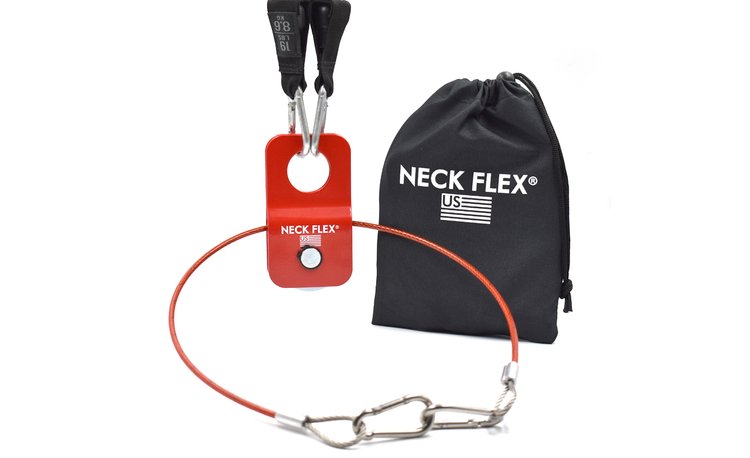
Rotation — the forgotten fourth. Controlled turning against light resistance. Almost nobody trains it, which is a mistake on two counts: the SCM is a rotator (you're leaving growth on the table), and rotational strength is what sports actually demand — checking a mirror, absorbing an angled hit, turning against a grip. Purpose-built rotation tools (our Revolver™ is one) or careful manual resistance both work. 8–12 slow reps per side.
A note on neck bridges: the old-school wrestler's bridge builds serious necks and serious injury lists. Loaded cervical bridging compresses the spine under bodyweight at end range. If bridging belongs in your sport's tradition, earn it over months with hands-assisted progressions; everyone else gets the same growth from harness work with none of the risk.
The program (8–12 weeks to a visibly different neck)
| Weeks 1–2: Foundation | Weeks 3–6: Growth | Weeks 7–12: Load | |
|---|---|---|---|
| Frequency | 2×/week | 3×/week | 3–4×/week |
| Resistance | Bodyweight only | Light band | Band + added load (plates or heavier band) |
| Flexion | 2×15 | 3×15 | 3–4×12–15 |
| Extension | 2×15 | 3×15 | 3–4×12–15 |
| Lateral (each side) | 2×10 | 3×12 | 3×12–15 |
| Rotation (each side) | 2×8 slow | 2–3×10 | 3×10–12 |
Rules that make it work: leave 2–3 reps in the tank on every set (neck training to failure is how people tweak things); add resistance only when the top of the rep range is smooth and controlled; full range of motion, no jerking, 2–3 seconds per rep; separate sessions by at least 48 hours early on. Ten to fifteen minutes per session — this attaches to the end of any workout.
Measure it monthly: relaxed tape measurement at the thickest point below the Adam's apple, same time of day, plus front and side photos. Progress you can see beats motivation you have to manufacture.
How fast is "fast"? Honest timelines
Let us assume you are a healthy male with maximum motivation: training every day or close to it, five to ten minutes a session, loading all four directions with a Neck Flex, and not in a calorie deficit. Here is what fifteen years of customer results look like.
- Weeks 1–2: strength jumps quickly and the neck starts to feel stable under load. Neural, real, and not yet size.
- Weeks 1–4: one inch or more. Collar fit changes, the SCM shows, the neck-trap slope fills in. This is the fastest visible change most people get from any single training habit.
- Week 12: at least two inches, if you stay consistent and do not miss weeks.
- Months 3–6: you arrive. Most people reach the size and strength they were after in here — and from then on, once a week maintains it.
Training twice a week instead? At least one inch in the first twelve weeks. Once a week, on and off? One to two inches over three to six months. It still works — it is just the slow lane.
A few honest adjustments. If you are dieting, expect strength to climb and size to lag; muscle is built from a surplus. If you are a woman, expect real gains in both size and strength, but less than the male numbers above. And measure the same way every single time — same spot, same tape tension, relaxed, same time of day — or you will fool yourself in both directions.
Five to ten minutes a day. That is the whole ask.
Before and after photos from Neck Flex customers →
Why bother (besides the mirror)
A stronger neck is one of the few concussion risk factors an athlete can change: research on 6,704 high school athletes co-authored by Dr. Dawn Comstock found each additional pound of neck strength associated with 5% lower concussion odds (Journal of Primary Prevention, 2014), and a 2019 Rutgers systematic review reached the same recommendation. No equipment or program eliminates concussion risk — but neck strength is trainable. Beyond sport: posture under desk-work hours, fewer tension complaints, and the simple fact that the neck is the one muscle group visible in every shirt you own. More on the research: our concussion prevention page.
Equipment: what you need, and when
Nothing, at first. Weeks 1–2 are bodyweight — start today on the floor.
A resistance band gets you through the growth phase.
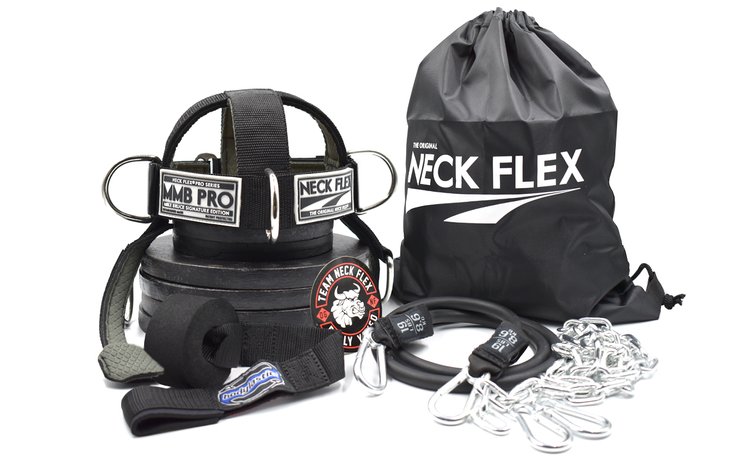
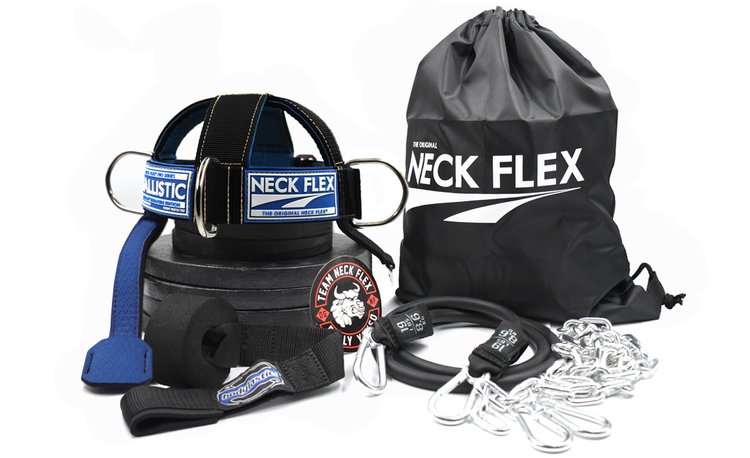
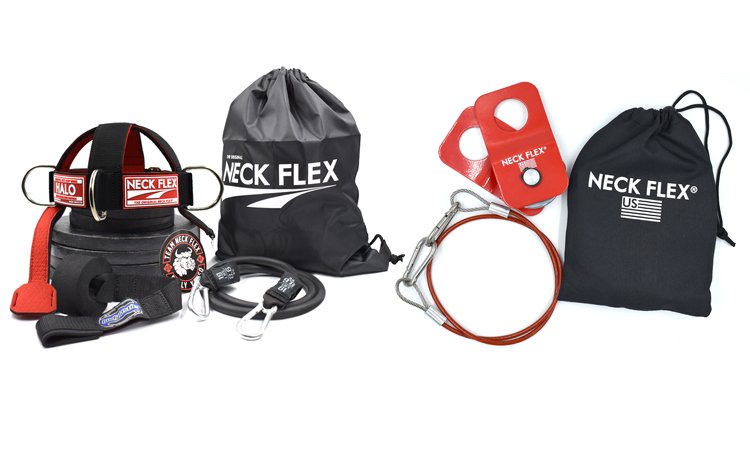
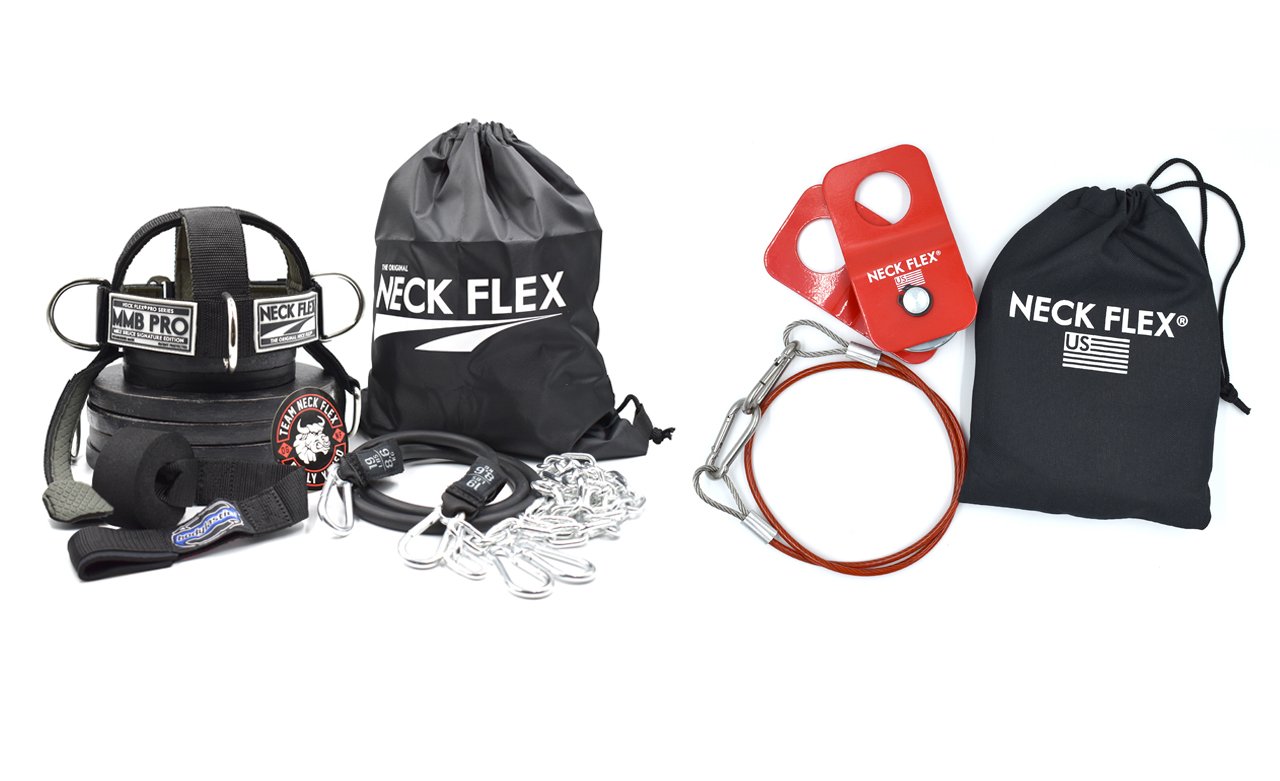
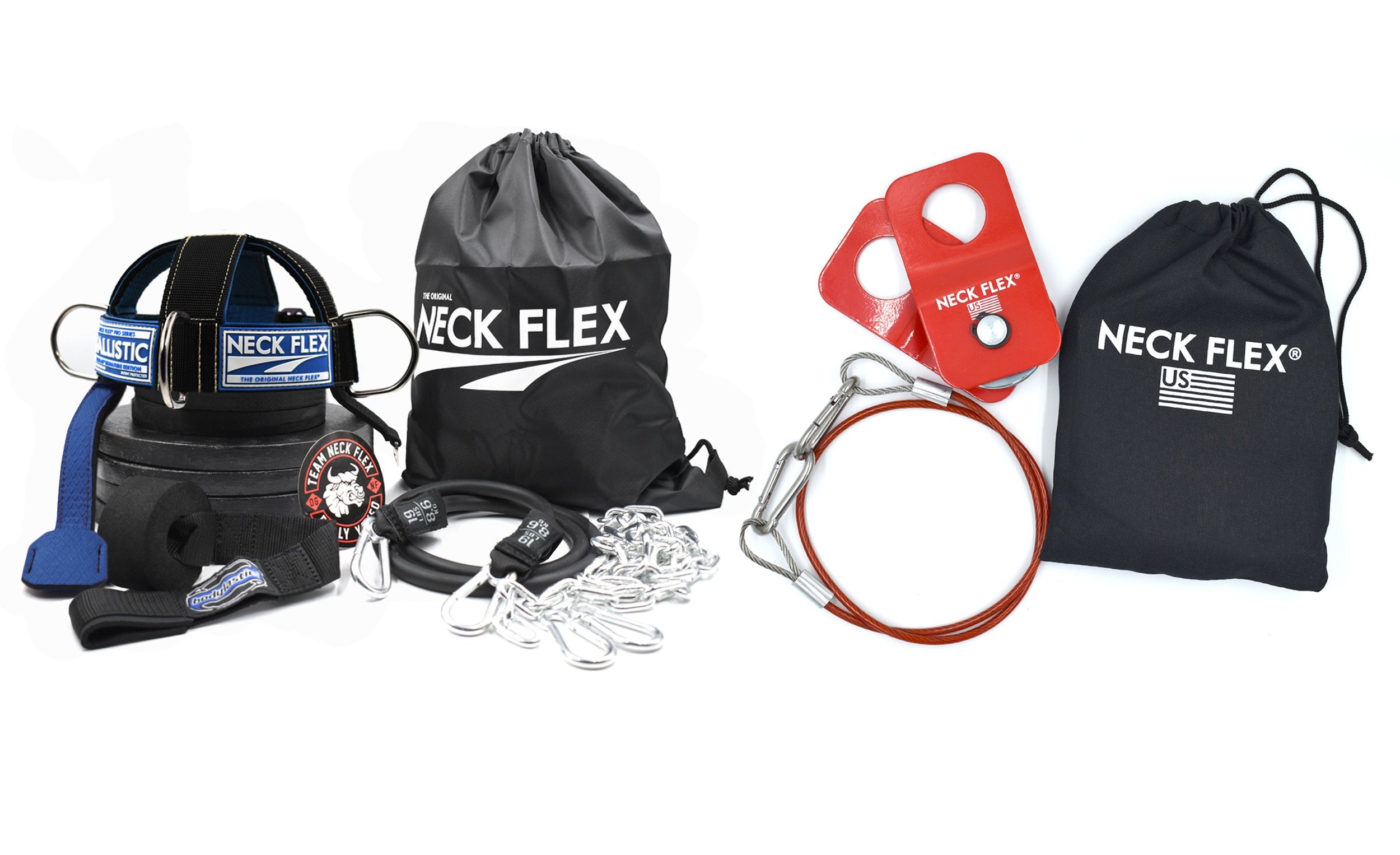
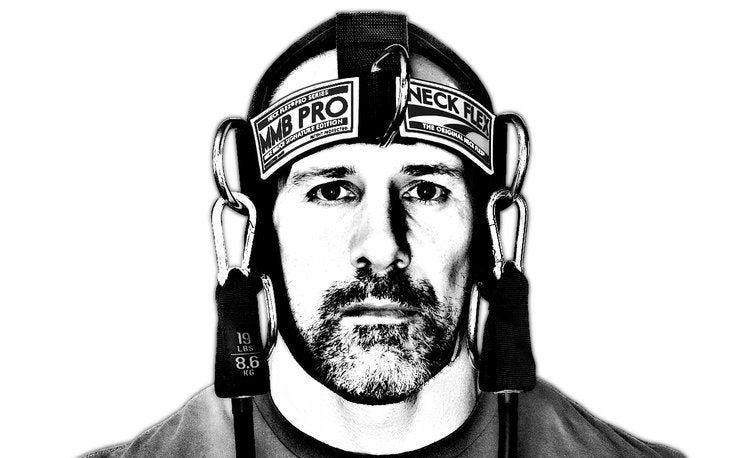
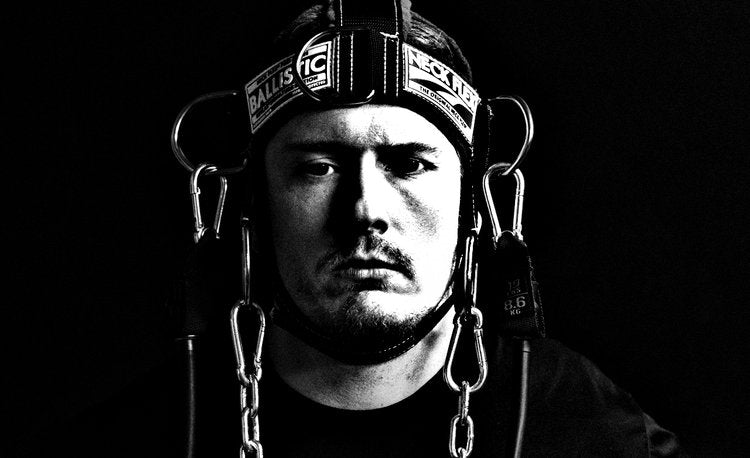
A neck harness is the upgrade that makes progression permanent — it turns "nodding against gravity" into loadable training for flexion, extension, and lateral work, with resistance you can scale for years. What to look for: metal (not plastic) attachment points, padding that holds position under real load, multiple anchor points so all four movement families are trainable, and band and plate compatibility so the harness grows with you. That checklist is, not coincidentally, what our patented HALO Series Kit was designed around ($99.95 with a 19 lb Bodylastics band and door anchor — training in any room with a door); the MMB Pro adds dedicated plate loading; and the Revolver™ adds true loaded rotation. Comparing us against the other big name in neck training? We wrote an honest, sourced comparison: Neck Flex vs. Iron Neck (2026).
Frequently asked questions
How long does it take to get a noticeably bigger neck?
It depends on how hard you train. A healthy male training daily or near-daily for five to ten minutes, loading all four directions and eating enough, typically sees an inch or more in the first four weeks and at least two inches by week twelve. Twice a week with nothing else changed: at least an inch over twelve weeks. Once a week and inconsistently: one to two inches over three to six months. Training in a calorie deficit means less size, though strength still improves.
Can I train my neck every day?
You can, but you shouldn't at first. Start at 2–3 sessions weekly with 48 hours between. Advanced athletes handle near-daily light work, but volume earns its way up.
Do neck exercises actually work, or is neck size genetic?
Insertion points and frame are genetic; muscle size is trainable. The neck responds to progressive resistance like any muscle group — most "can't grow" cases have simply never trained it directly with increasing load.
What's the best neck exercise for mass?
No single one — the neck is a 360° structure. Weighted extension builds the back, flexion builds the SCM "pillars," lateral flexion fills the sides, rotation finishes the SCM. The program above hits all four.
Are neck bridges safe?
Loaded cervical bridging carries real injury risk and is unnecessary for growth. Harness-based training produces the same hypertrophy with controlled loading. If your sport's tradition demands bridging, progress to it over months, hands-assisted.
Bodyweight or weighted neck training?
Bodyweight to learn the movements (weeks 1–2), band resistance to grow (weeks 3–6), then added load to keep growing. The sequence matters more than the equipment — but without eventual added resistance, progress stalls.
What neck size is considered thick?
There is no agreed threshold, and the population figures passed around online are not traceable to a source we are willing to stand behind — so we are not going to repeat them. What our customers report is more useful anyway: one inch of gain is where collars start fitting differently, and two inches is where other people say something. Measure your own starting point, the same way every time, and compare yourself to that rather than to a number off the internet.
Questions about training or which setup fits you: support@theneckflex.com.
Further reading
The tape-measure expectations above are also published, with the research they sit alongside, at necktraining.com/neck-size — a reference archive published by Gonza LLC, the maker of Neck Flex, with that ownership disclosed on every page.

