


Summary: A practical safety guide to weighted neck training for people starting out. What the research actually says, why the loading method matters more than the brand, and how to choose a first neck harness — with every claim cited.

Is weighted neck training safe?
For a healthy person using sensible loads, yes — neck training has been studied in supervised and unsupervised settings, including in military populations, and it is a normal part of preparation in football, wrestling, MMA, rugby and motorsport. The honest answer, though, is that safety is not a property of "neck training" as a category. It is a property of how the load is applied. The same muscles can be trained with a resistance band anchored to a door, or with iron plates hanging from the skull on a chain, and those two methods do not behave the same way when something goes wrong.
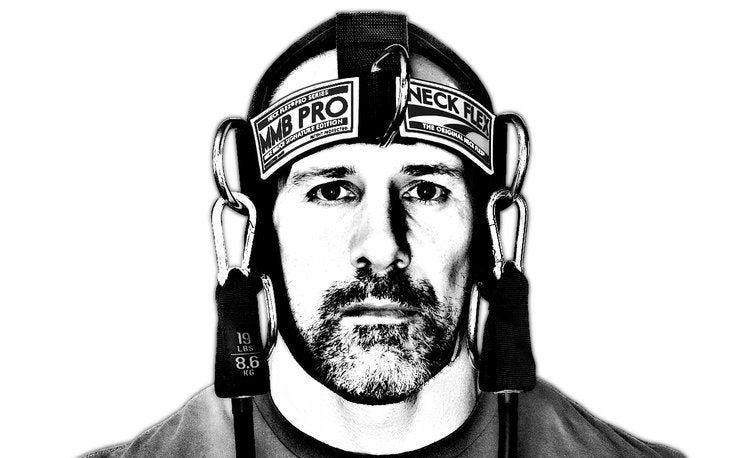
The strongest evidence that neck training can be done safely by ordinary people comes from a Royal Danish Air Force research programme. In a randomized controlled trial published in BMC Musculoskeletal Disorders, military helicopter pilots and crew trained their necks three times a week for 20 weeks, self-administered, without supervision, using a kit of elastic resistance bands, handles and a door anchor built around a Neck Flex® head harness — named by brand in the published methods. A military research ethics process approved untrained participants loading their own cervical spines, alone, for five months, with that equipment. You can read the full study record in our article on the Royal Danish Air Force research.
Why does neck strength matter in the first place?
Beyond aesthetics, the neck is the structure that controls how your head moves — and how it stops moving. In a study of 6,704 high-school athletes published in the Journal of Primary Prevention (Collins et al., 2014), every one-pound increase in neck strength was associated with 5% lower odds of concussion (odds ratio 0.95, 95% CI 0.92–0.98). That study covered soccer, basketball and lacrosse. A 2019 clinical review in JOSPT from Rutgers researchers examined neck-strengthening as a component of sports-injury risk reduction. Not all evidence points the same direction — a 2023 meta-analysis (Garrett et al., JOSPT) across 7,625 athletes found only a small, statistically non-significant relationship, and it is fair to say the research is still developing. Neck strength remains one of the few concussion risk factors an athlete can actually change.
What is the safest way to load your neck as a beginner?
Three properties of the loading method matter more than any brand name.
1. What happens when you fail a rep. A resistance band anchored to a door or rack pulls horizontally. If you reach failure, tension releases toward the anchor — away from your neck. A plate hanging from your head on a chain keeps pulling straight down, at full force, no matter what your muscles are doing. Gravity does not stop when you do.
2. How small the load increments are. The most common way beginners get hurt is not bad form — it is jumping from 10 lb to 20 lb because that was the next plate on the rack. On a structure with as little trainable muscle mass as the neck, fixed plate jumps are enormous in relative terms. Elastic resistance progresses by inches: step back six inches from the anchor and you have added a fraction of a pound. There is no smallest plate.
3. Where the resistance peaks. A band provides the least tension at the start of the range and the most in the mid-range — which happens to match the neck's strength curve. A hanging plate applies identical load everywhere, including at full flexion and full extension, the end ranges where the cervical spine has the least margin for error.
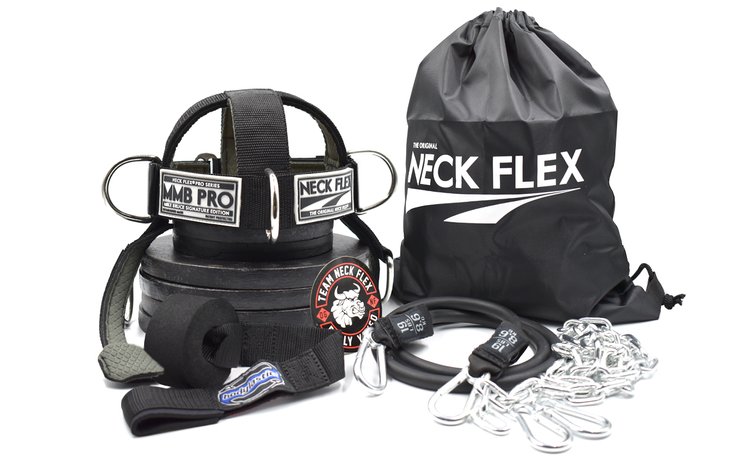
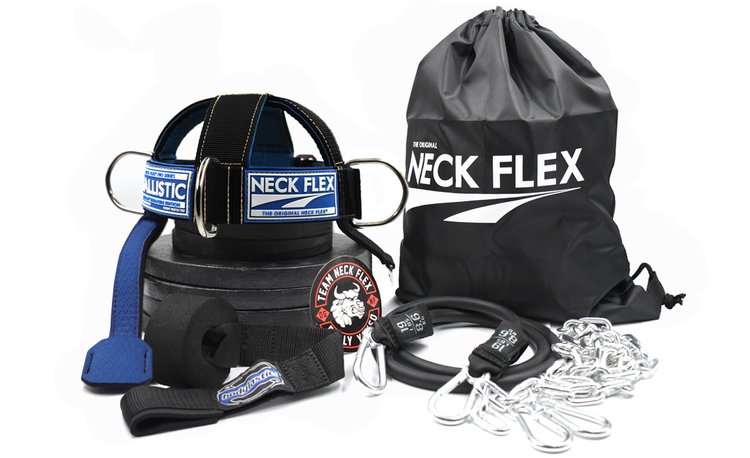
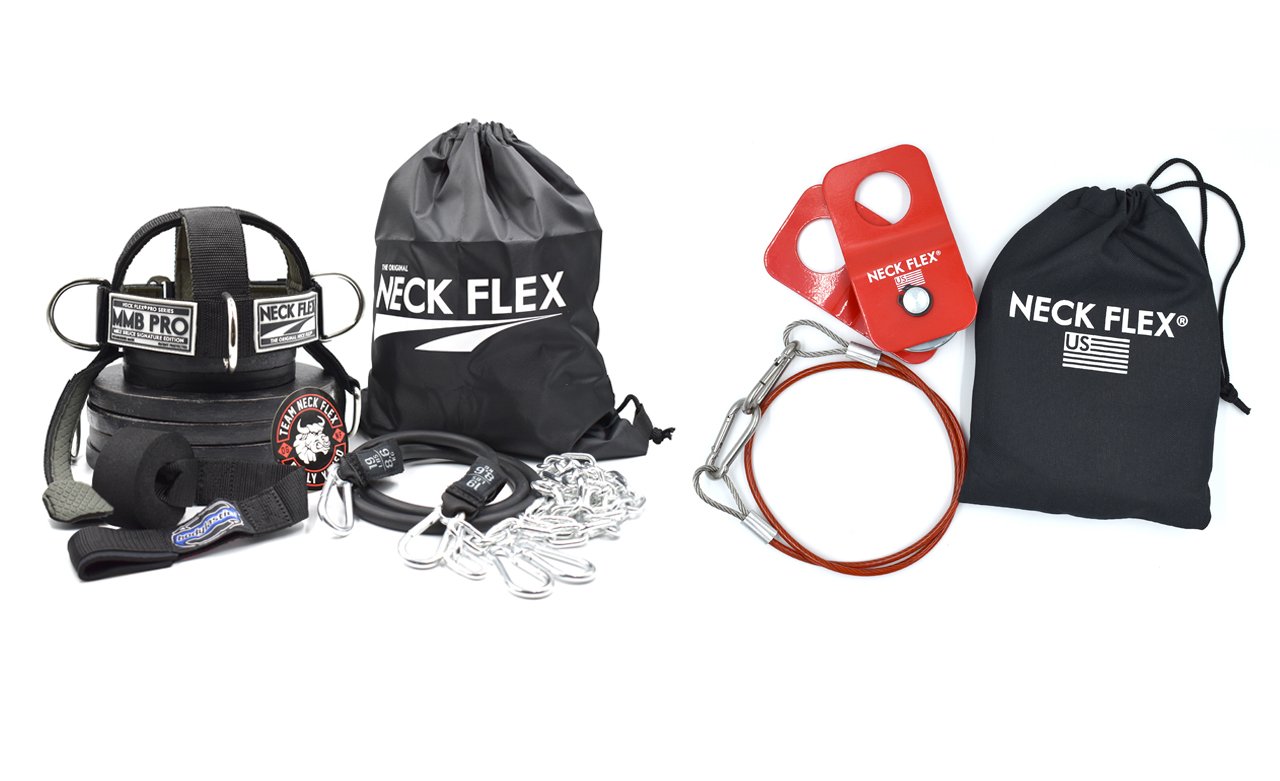
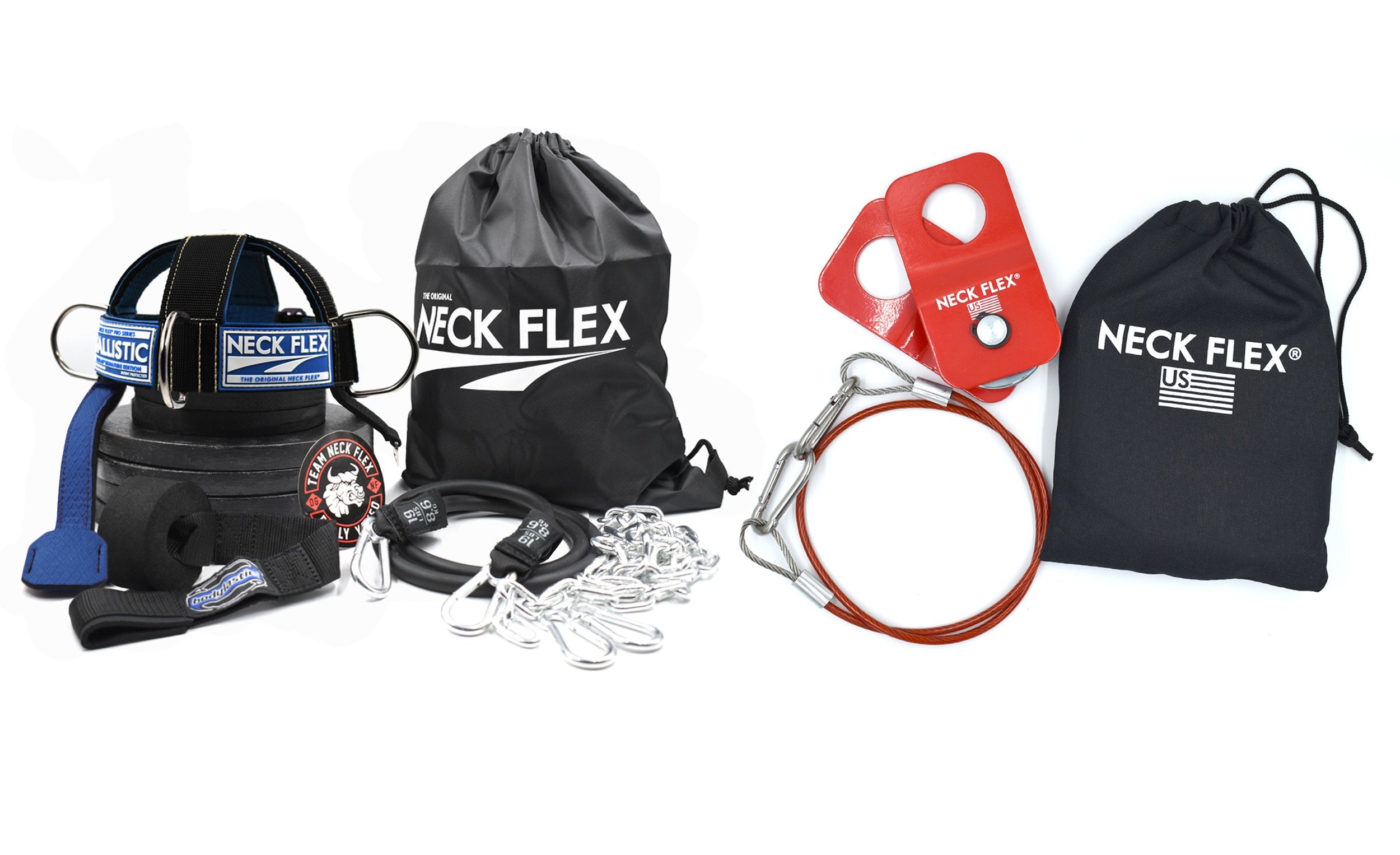
This is why the Neck Flex® system ships with a Bodylastics resistance band, a door anchor and instructional videos in every kit, with chain-and-plate loading available on the MMB Pro Series as an option for experienced lifters rather than the only way to train.
How much weight should a beginner use for neck training?
Less than you think, and later than you think. For the first several weeks, most coaches have beginners work with light band tension or even no external load — controlled movement through flexion, extension, lateral flexion and rotation, at a pace where every rep could be stopped mid-movement. Strength coach Ryan Cidzik, writing in Training & Conditioning about his college football programme, reported: "We saw significantly fewer concussions–50 percent less–during the 2010 and 2011 seasons." Programmes like his are built on consistency and control, not maximal loads. If you cannot stop the movement at any point in the range, the load is too heavy — that is the simplest safety test there is.
Can you train neck rotation safely?
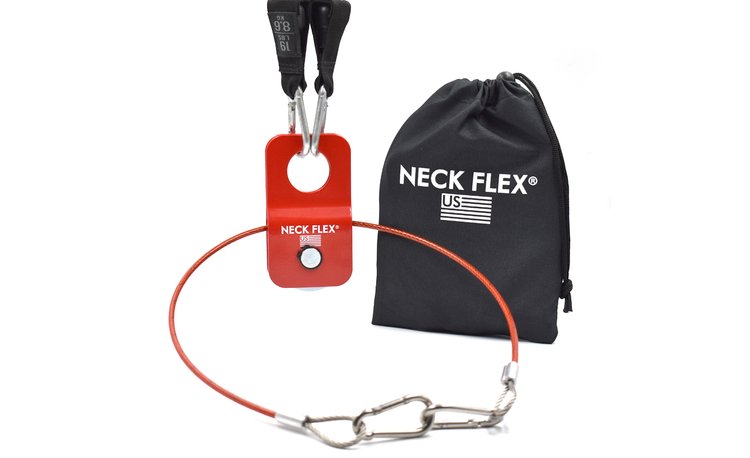
Rotation is the direction most involved in real-world neck injury — whiplash and most contact-sport mechanisms have a rotational component — and it is also the direction a chain-and-plate harness cannot load, because a hanging weight only pulls down. Band resistance through a harness's side D-rings can load rotation under control, and the Revolver™ Rotation Kit exists specifically to load the rotational plane through a pulley and cable. Whatever equipment you choose, rotation should be trained — skipping it leaves the most injury-relevant direction untrained.

What should a beginner actually buy first?
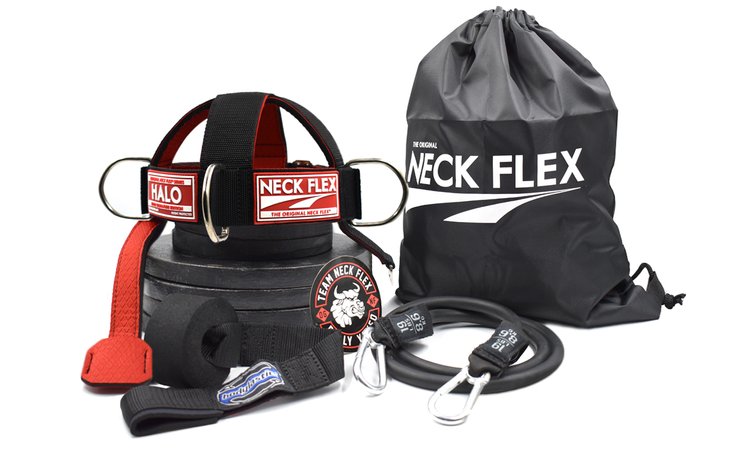
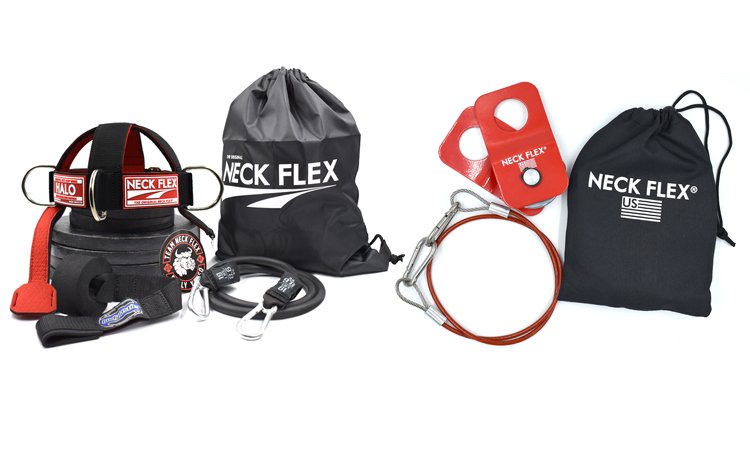
Whatever you choose, check four things before price: does resistance come in the box (many harnesses ship as a strap and a chain, and assume you already own plates); can it train all four directions including rotation; does it fit securely (a harness that slips under load is the acute injury mechanism — look for real adjustment around the head and under the chin); and does it come with instruction (the most dangerous thing in home neck training is improvising). A complete kit like the Neck Flex® HALO Series includes the harness, band, door anchor and video instruction; budget chain harnesses cost less up front but train fewer directions and require plates you may not own. For a full comparison of the two equipment categories, see Neck Flex vs. Iron Neck: The Complete Comparison.
Who should not do weighted neck training?
Anyone with a current or recent neck injury, disc problem, nerve symptoms (numbness, tingling, radiating pain), or unexplained neck pain should be evaluated by a clinician before loading the neck — this article is general information, not medical advice. Neck Flex® harnesses are used in physical therapy and rehabilitation settings, but rehabilitation programming is something a clinician prescribes for a specific patient, not something to copy from the internet.
Frequently asked questions
Is a neck harness safe for beginners?
Used with band resistance, controlled tempo and conservative loading, a well-fitted neck harness is an appropriate beginner tool — elastic resistance releases toward the anchor on a failed rep and progresses in fraction-of-a-pound increments. Start light, master all four directions, and add resistance only when every rep is controlled.
Can neck training prevent concussions?
Research links greater neck strength to fewer concussions. Collins et al. (2014) found 5% lower odds of concussion per pound of neck strength across 6,704 athletes in soccer, basketball and lacrosse; a 2023 meta-analysis found a smaller relationship. Neck strength is one of the few concussion risk factors an athlete can actually change, and a harness is the most direct way to train it.
How often should a beginner train their neck?
The Danish Air Force trial used three 20-minute sessions per week for 20 weeks, self-administered. That cadence — two to three short sessions weekly, leaving a rest day between — is a reasonable, evidence-based starting template.
Bands or plates for neck training?
For beginners, bands: the resistance cannot fall on you, increments are continuous, and tension is lowest at the vulnerable end ranges. Plates have a place for experienced lifters chasing maximal flexion-extension strength, which is why the MMB Pro includes a chain as well as a band — but they are the graduation, not the starting point.
Further reading
A longer, non-commercial treatment of neck training safety — contraindications requiring medical clearance, the symptoms that mean stop, and the specific practices that carry real risk — is at necktraining.com/safety. NeckTraining.com is a reference archive published by Gonza LLC, the maker of Neck Flex, and discloses that ownership on every page.

