
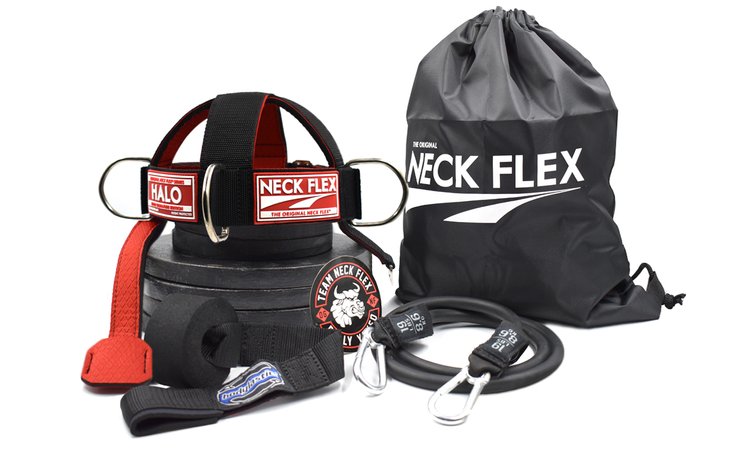

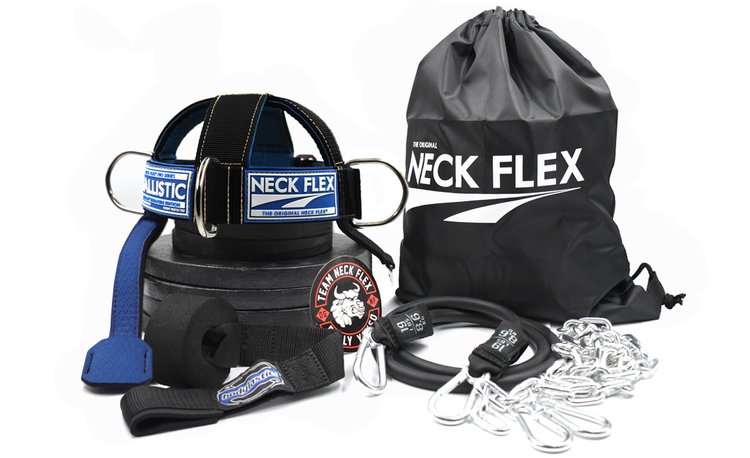
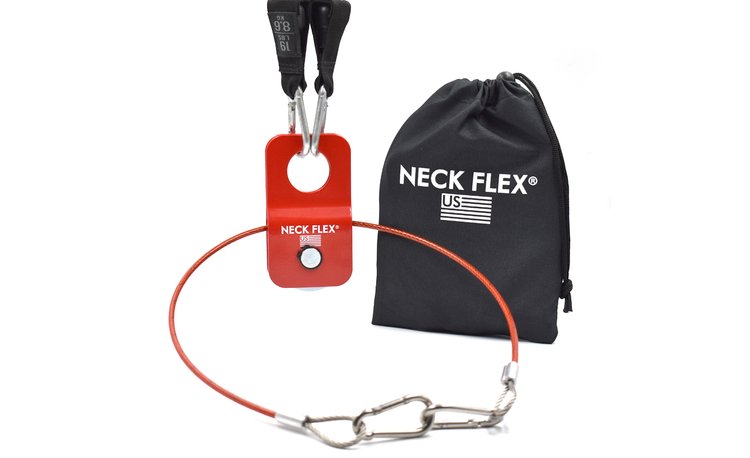
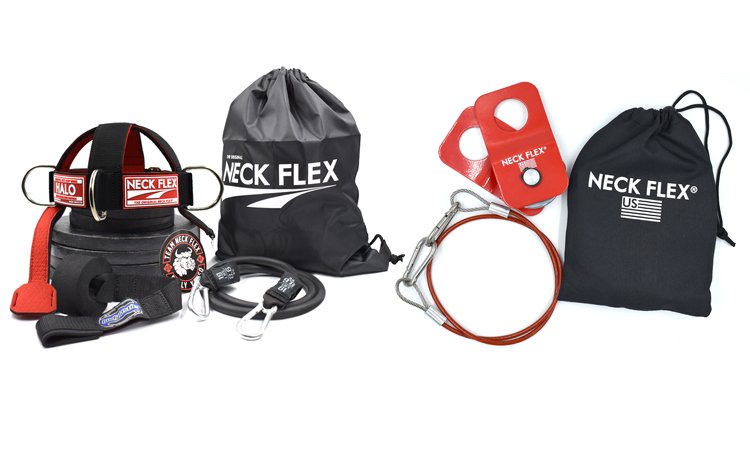
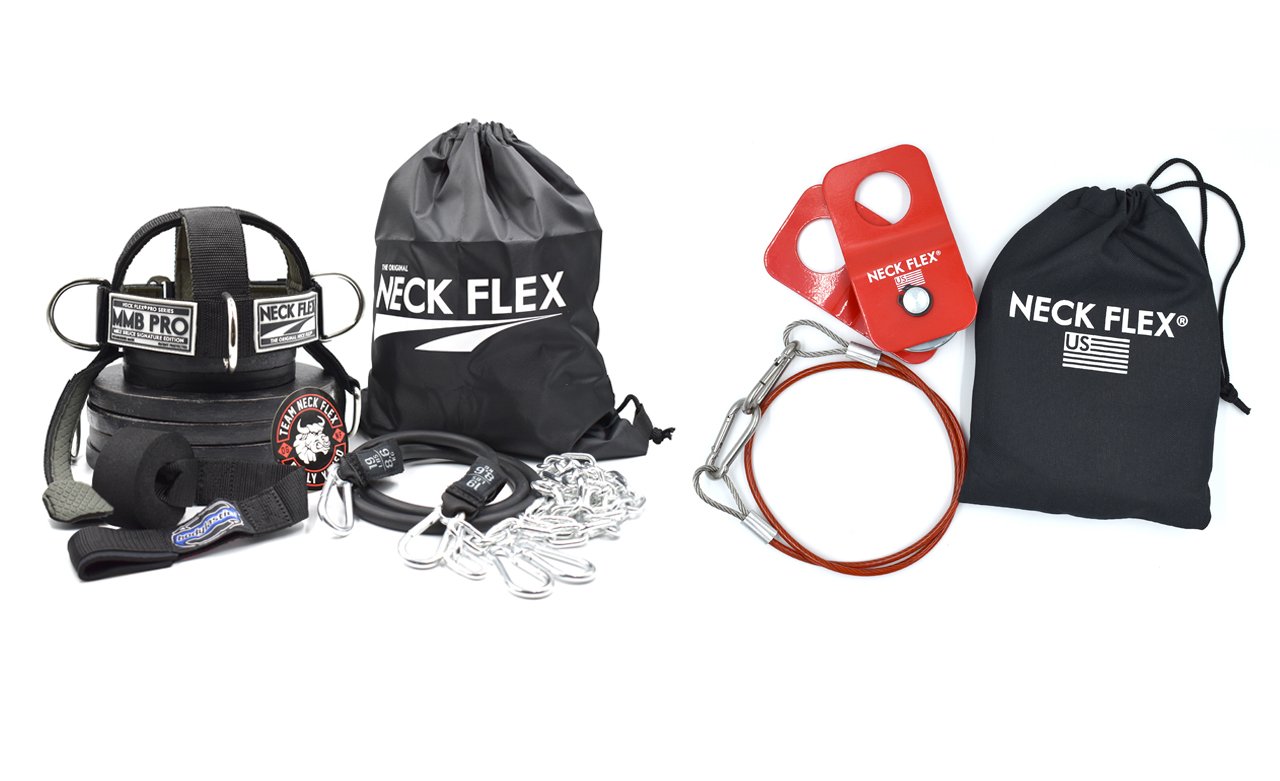
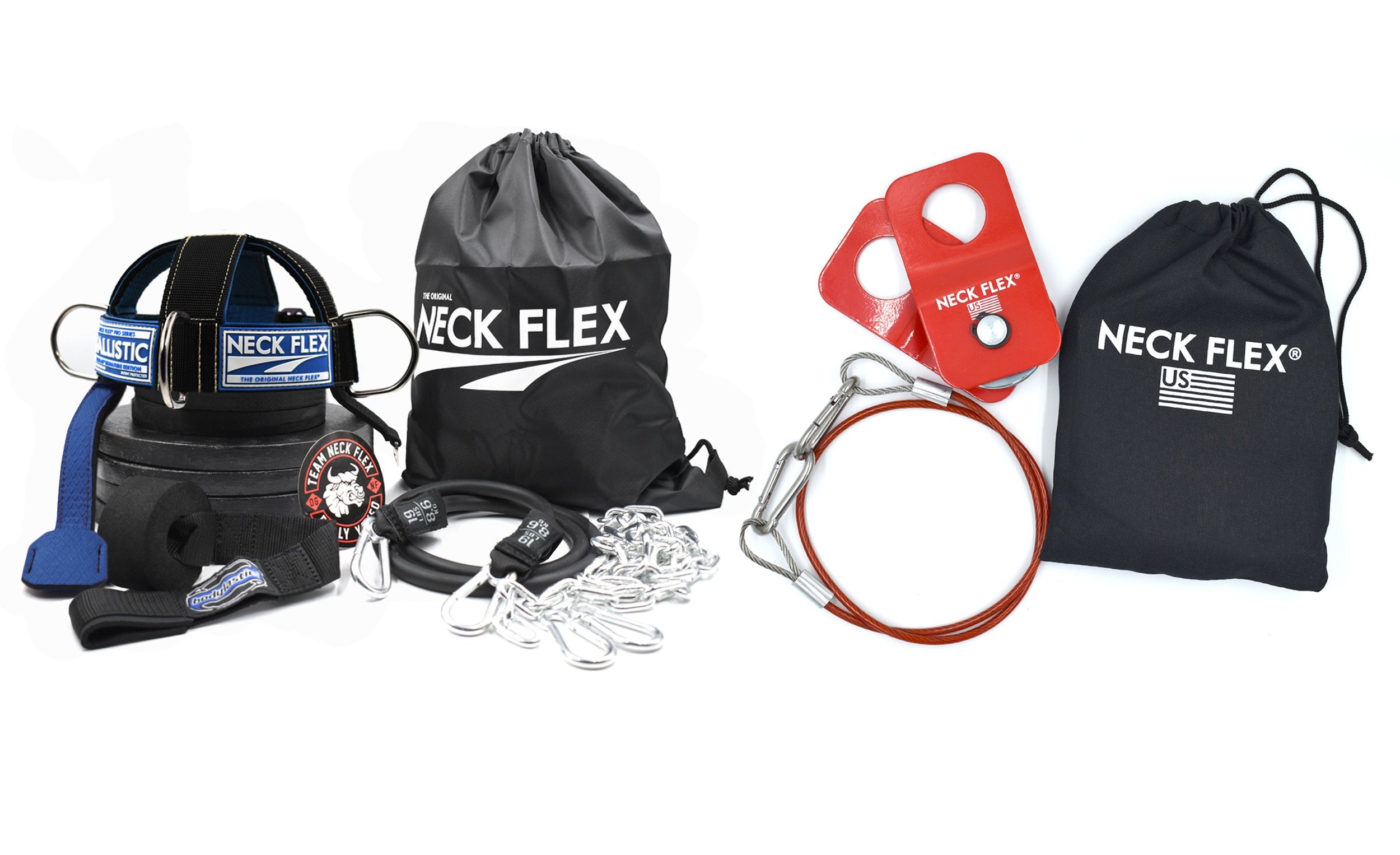
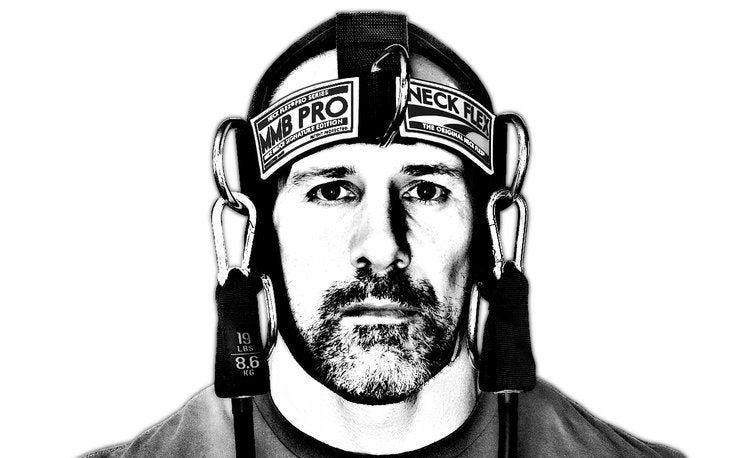
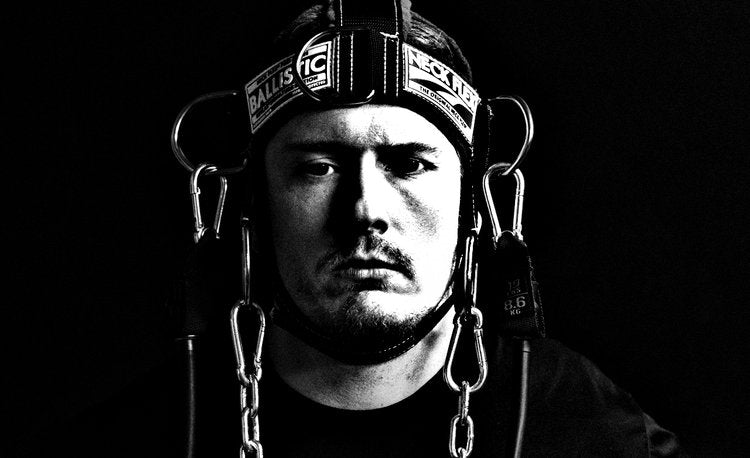

Neck Flex® is a combat-veteran-owned American small business. We build the harness in the evidence base, we understand how units buy, and we are 40 miles from the Pentagon.
The neck harness in the military evidence base
When researchers ran a randomized controlled trial on neck and shoulder training with 69 Royal Danish Air Force helicopter pilots and crew, the equipment they issued was a head harness — and the papers name it: The Original Neck Flex® Head Harness, in the Methods sections of both BMC Musculoskeletal Disorders (2017) and Frontiers in Public Health (2020). To our knowledge, no other neck-training harness has been named in peer-reviewed military research. Read the full research summary →
When military researchers needed a neck harness rigorous enough for a 20-week trial, this is the one they used.
The heaviest pound a soldier carries is the one on their head
The U.S. Army’s own aeromedical laboratory reports that currently fielded dismounted helmet configurations range from 3.1 to 7.7 pounds once night vision, mounts and counterweights are on the rail — and states plainly that “there is a limit to how much head-supported mass a Soldier can wear during operational exposures before the risk of cervical spine injury and performance degradation outweighs the intended protection” (USAARL, 2025).
Biomechanics research puts a number on what that mass costs: every newton of head-supported weight adds roughly 2.05 newtons of compressive load at the C5–C6 joint — head-borne gear loads the neck at about double its weight (Barrett et al., Human Factors 2024). The rest of the body is carrying too: GAO found soldiers wear and carry 96 to 140 pounds, averaging 119 pounds (GAO-17-431).
And the baseline is not where it should be. In a 2025 USAARL study of 60 regular Army soldiers, isometric neck strength measured below published population norms in every direction tested (USAARL-TECH-FR-2025-30).
The gap in the training doctrine
Army exercise doctrine trains nearly everything else. ATP 7-22.02 — the Army’s Holistic Health and Fitness exercise catalogue — includes a Shoulder Stability Drill and a Hip Stability Drill. It contains no neck exercise at all; the manual’s only mention of the neck is a cue to tuck the chin during shoulder rolls. The part of the body that carries the helmet, the night vision, and the counterweights is the one part with no drill.
That is the gap Neck Flex® fills: a patented four-way cervical training system — flexion, extension, lateral flexion, rotation — that drops into unit PT the way a stability drill does: minutes per session, minimal footprint, no rack required, scalable from a fire team to a brigade.
Neck strength and brain injury: what the research shows
Since 2000, 533,519 U.S. service members have been diagnosed with a traumatic brain injury; 81.9% were classified as mild — concussions (DoD TBICoE, through 2025 Q3). RAND found most military mild TBIs happen not in combat but in training accidents, falls, sports, and vehicle crashes (RAND, 2016) — exactly the impact-and-acceleration events where the neck is the structure between the head and the load.
What the research supports:
- In a study of 6,704 athletes, every one-pound increase in measured neck strength was associated with 5% lower odds of concussion (OR 0.95, 95% CI 0.92–0.98) — the study led by injury epidemiologist Dawn Comstock’s research group (Collins et al., 2014).
- In laboratory impact testing, greater neck strength and bracing for impact independently reduced the head’s velocity change after impulsive loading in every direction tested (all P < .001) (Eckner et al., 2014).
- Rutgers researchers writing in JOSPT concluded cervical spine biomechanics “may be a modifiable factor” in reducing sport-related concussion risk, recommended cervical strength assessment in pre-season physicals, and noted that female athletes tend to have less neck strength — and worse concussion outcomes (Streifer, Brown, Esopenko et al., 2019).
Built for unit PT programs — at any scale
The Army is fielding Holistic Health and Fitness to 129 active brigades plus 59 area support teams by FY29, on its own finding of $8.15 returned per dollar spent on human performance (army.mil). The Marine Corps fields Force Fitness Instructors at unit level and HITT centers on installations. Every one of those programs has strength staff, a facility — and no cervical training station.
We support every scale of buy:
- Squad to squadron: kits priced under the U.S. micro-purchase threshold ($15,000) — one cardholder, one transaction. Configurations for 25–100 personnel.
- Battalion to brigade: simplified-acquisition quotes with full documentation, delivered same day.
- Program scale: for force-wide human-performance programs, we quote multi-thousand-unit procurements with tiered pricing, phased delivery, and program support — wall charts, training protocols mapped to unit PT sessions, and train-the-trainer material for strength staff.
Who we supply
Neck Flex® equipment is in use with allied air forces and special operations units in North America, Europe, and the Pacific, and with U.S. military unit purchasers. Unit names available to qualified government buyers on request, subject to customer consent.
Built for unit purchasing
- Government purchase card accepted. Itemised receipts provided.
- Tax-exempt sales to government buyers — certificate on file.
- Section 889 representation — completed form returned same day on request.
- Same-day formal quotations with our federal identifiers and codes (NAICS 339920, PSC 7810).
- In stock. Ships in 2–5 business days, with tracking sent the day it leaves.
- International: we ship to allied nations as a standard commercial export, and we understand unit-level purchase ceilings (UK £12,000 · Germany €15,000 · Canada CAD $25,000 · Finland €60,000 · Australia A$80,000).
- We are 40 miles from the Pentagon. In-person demonstrations available across the National Capital Region.
For requirement writers
If your purchase requires documentation of why this specific item, we maintain a one-page salient characteristics sheet citing the peer-reviewed research, the five U.S. patents, and the 14-year production history — written in the language your contracting office expects. Email support@theneckflex.com and it comes back same day.
Request a quote or unit trial
Email support@theneckflex.com or use our contact form, and include: your organisation and country, approximate quantity, need-by date, whether you require a formal quotation, and your payment method (purchase card or purchase order). We respond the same day. Or call 703-477-6412.
Evaluation units for military organisations are provided through no-cost loan agreements executed with your contracting office — ask us how this works. We do not send free product to individuals; your ethics office will thank us both.